Wood Handled Try-Miter Squares
Winterbottom’s 1869 patent is perhaps the most significant design change to the humble try square ever invented. The simple idea to make the cheek of the square turn 45 degrees was so easy to produce, yet added such utility, that his design has persisted in the market even to today. Presented here are all the known versions produced with wood handles through the 1950s. While Winterbottom’s original patent pertained to the basic 45 degree design, other makers improved upon the construction of the handle, resulting in the many unique designs and patents this guide will help identify.
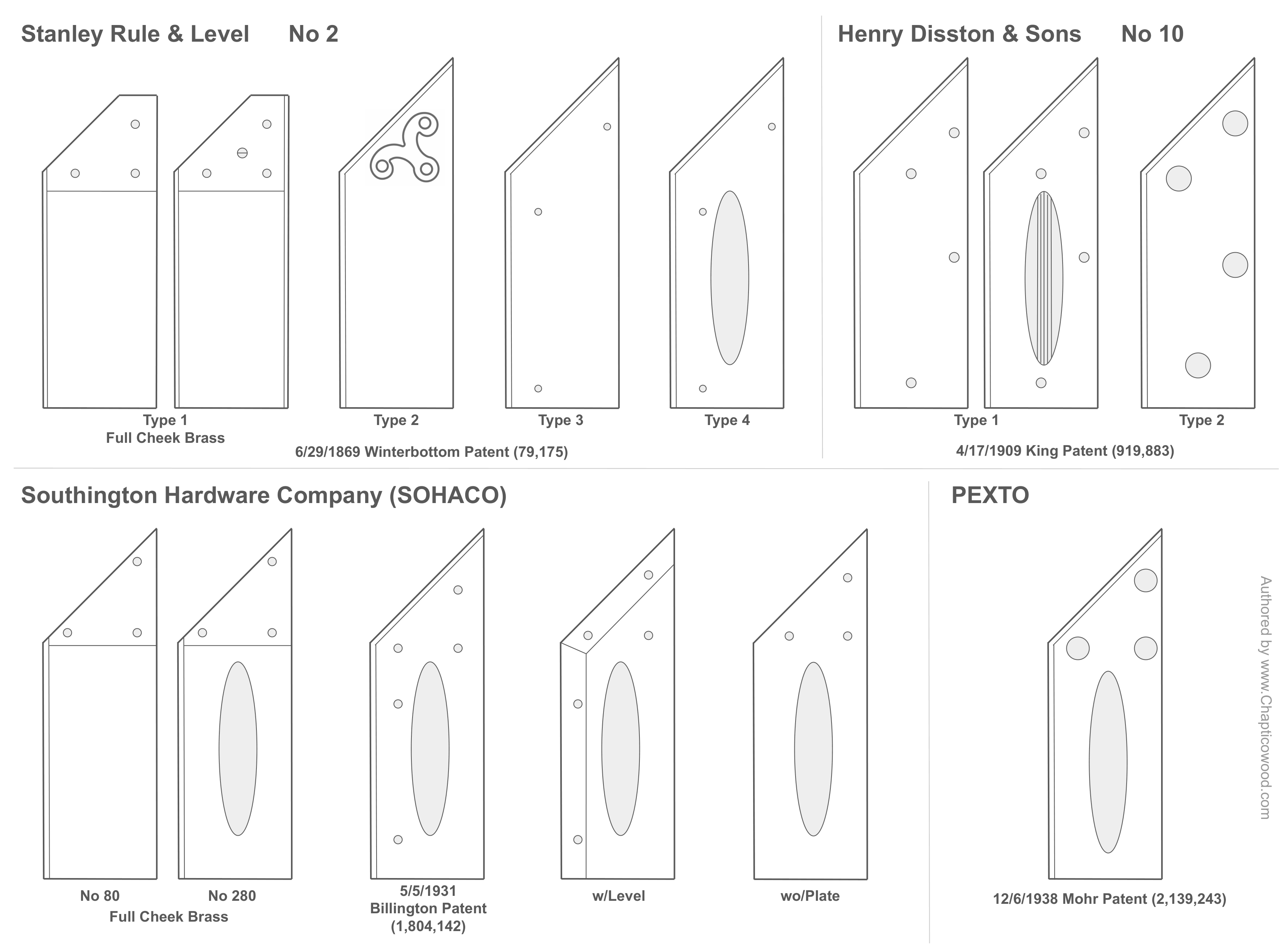
Provided here is a single image with illustrations showing all the different makers and designs (Full Size). The goal is to provide a single graphic to help the user quickly differentiate between styles and identify their square. Following below are detailed discusions of each along with images. Even more photos of the patented squares can be seen on this page.
Stanley Rule & Level
Stanley only produced wood handled miter squares under one model number, the No 2. First offered in the 1874 catalog, the No 2 would continue through WWII, disappearing by the 1949 catalog. During that period there were 4 distinct types that were offered.
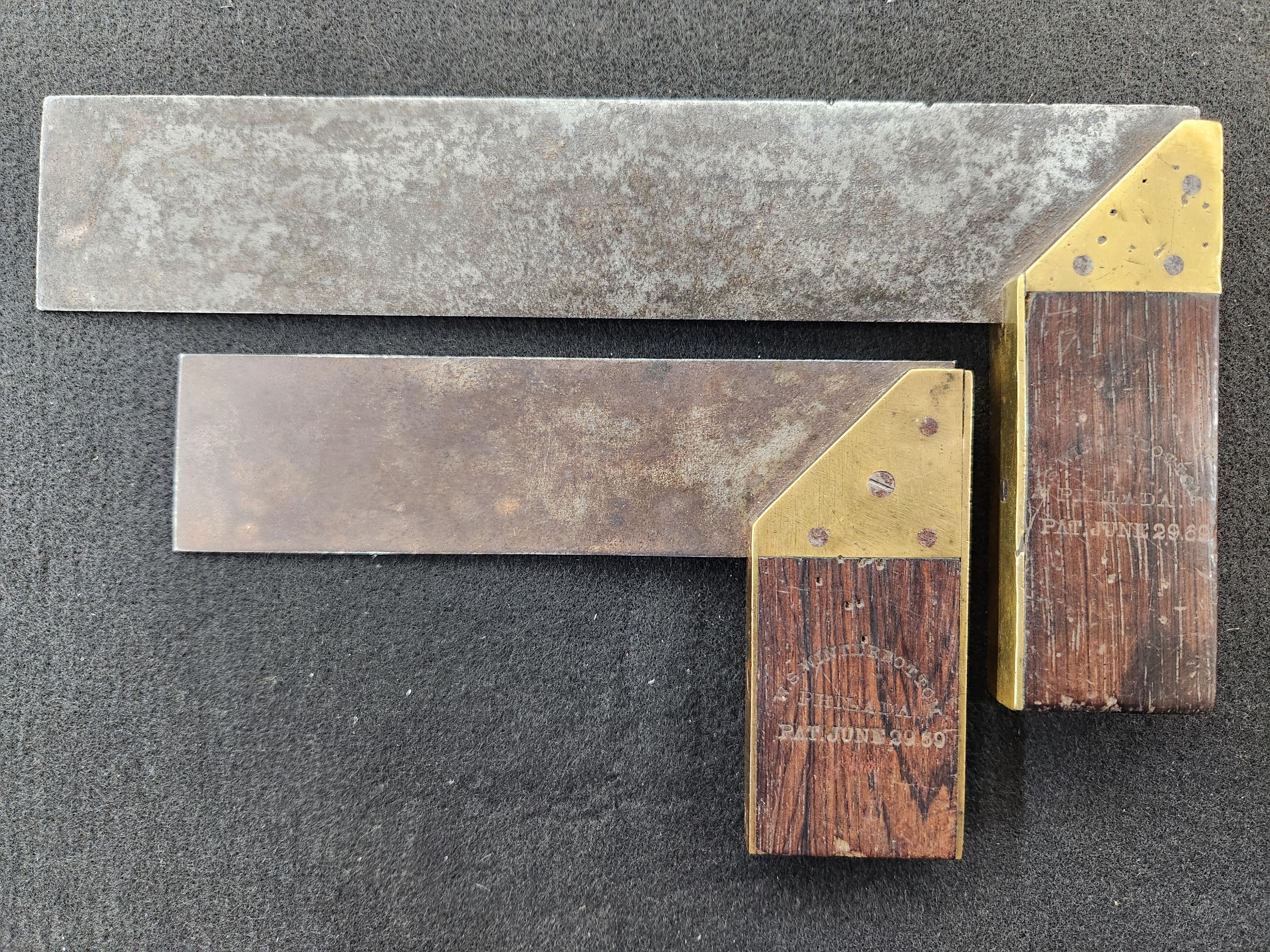
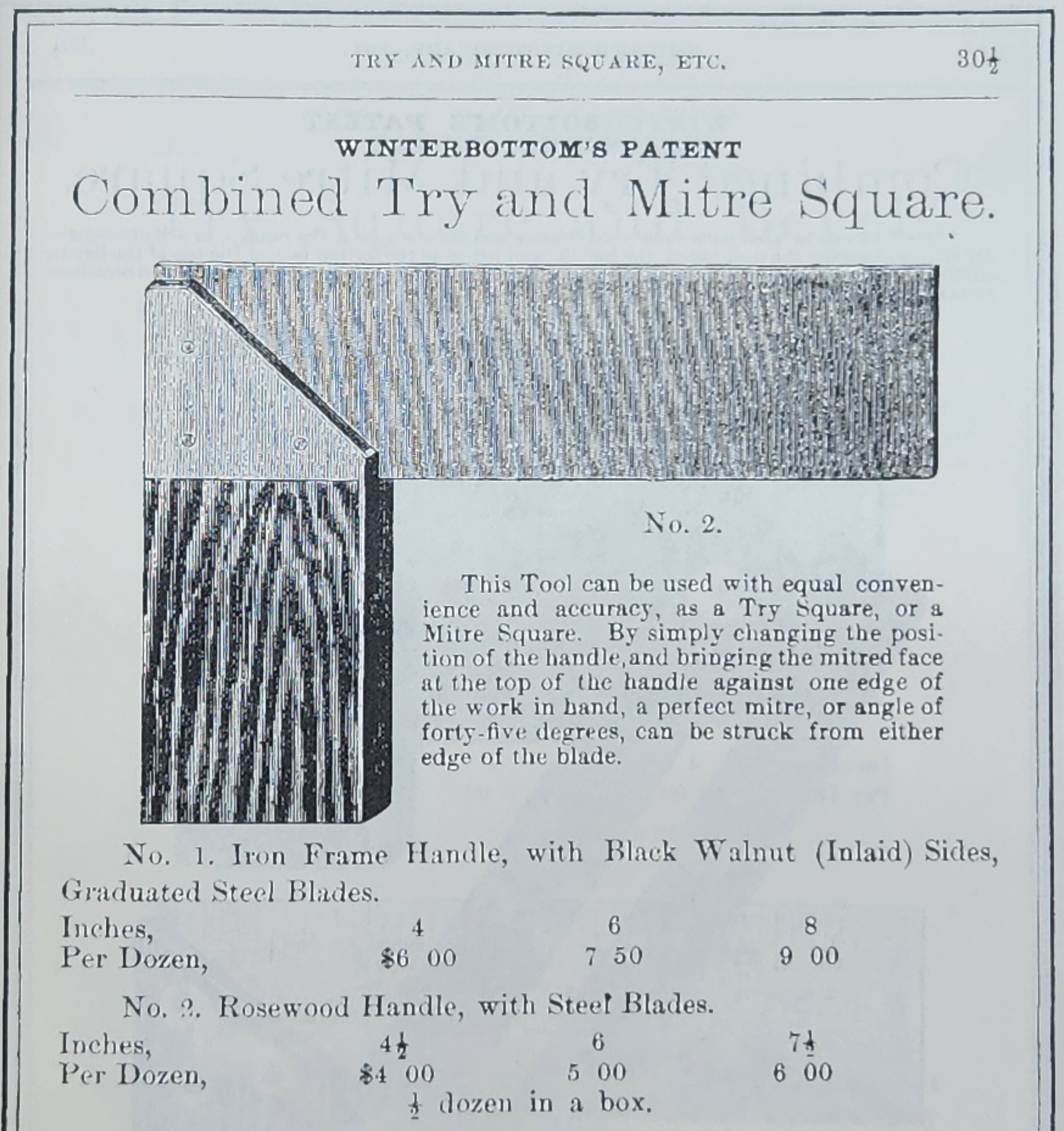
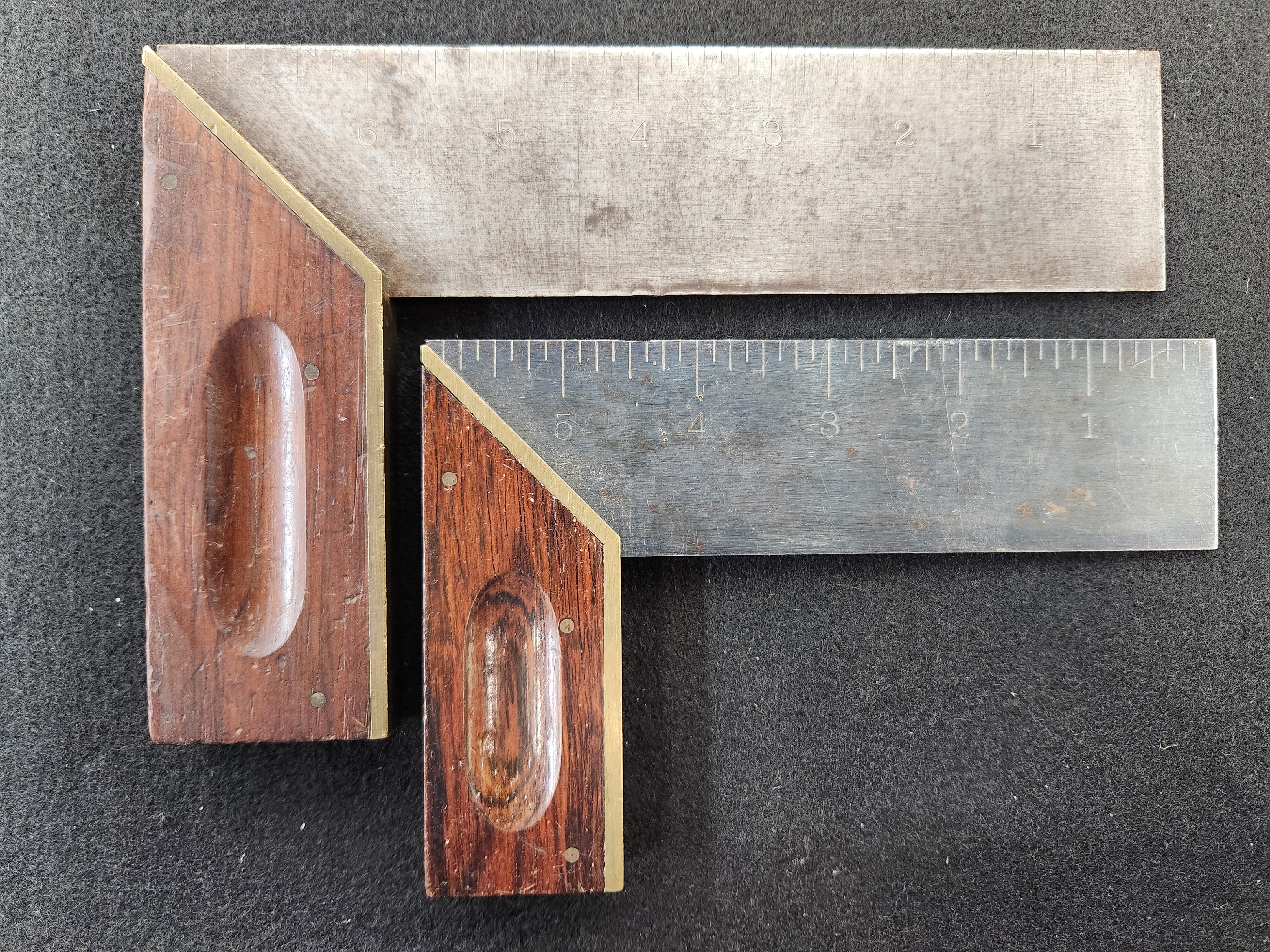
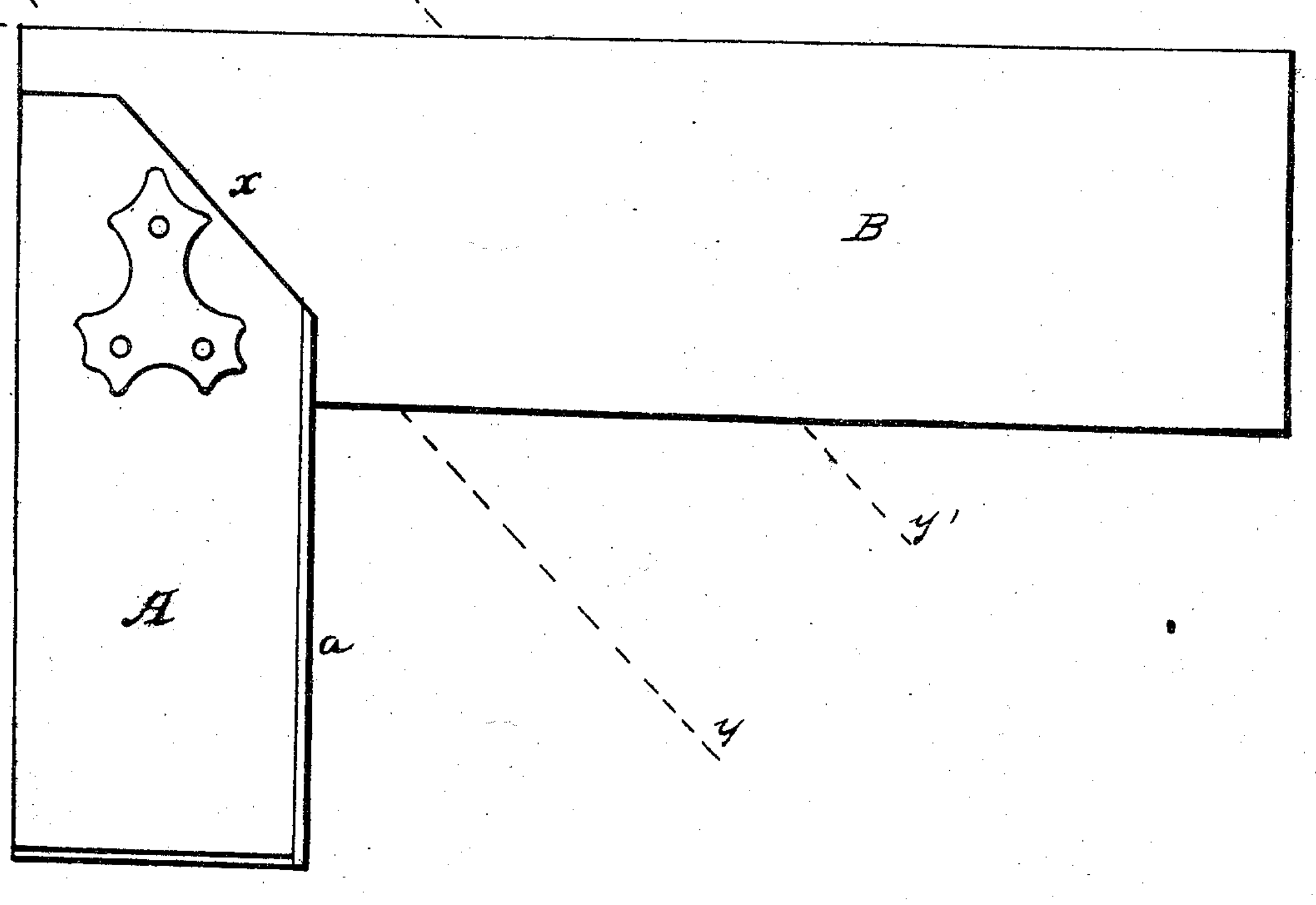
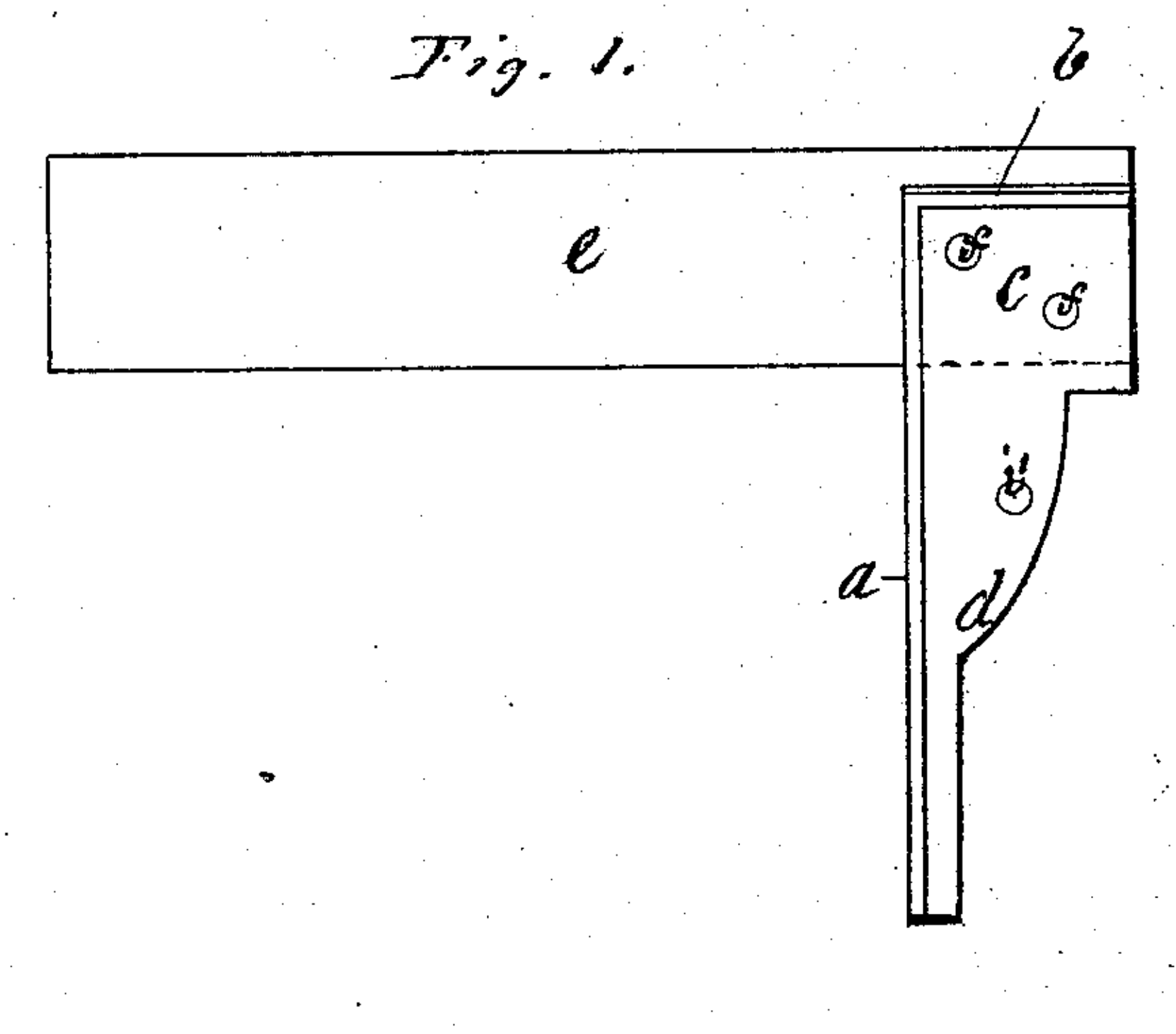
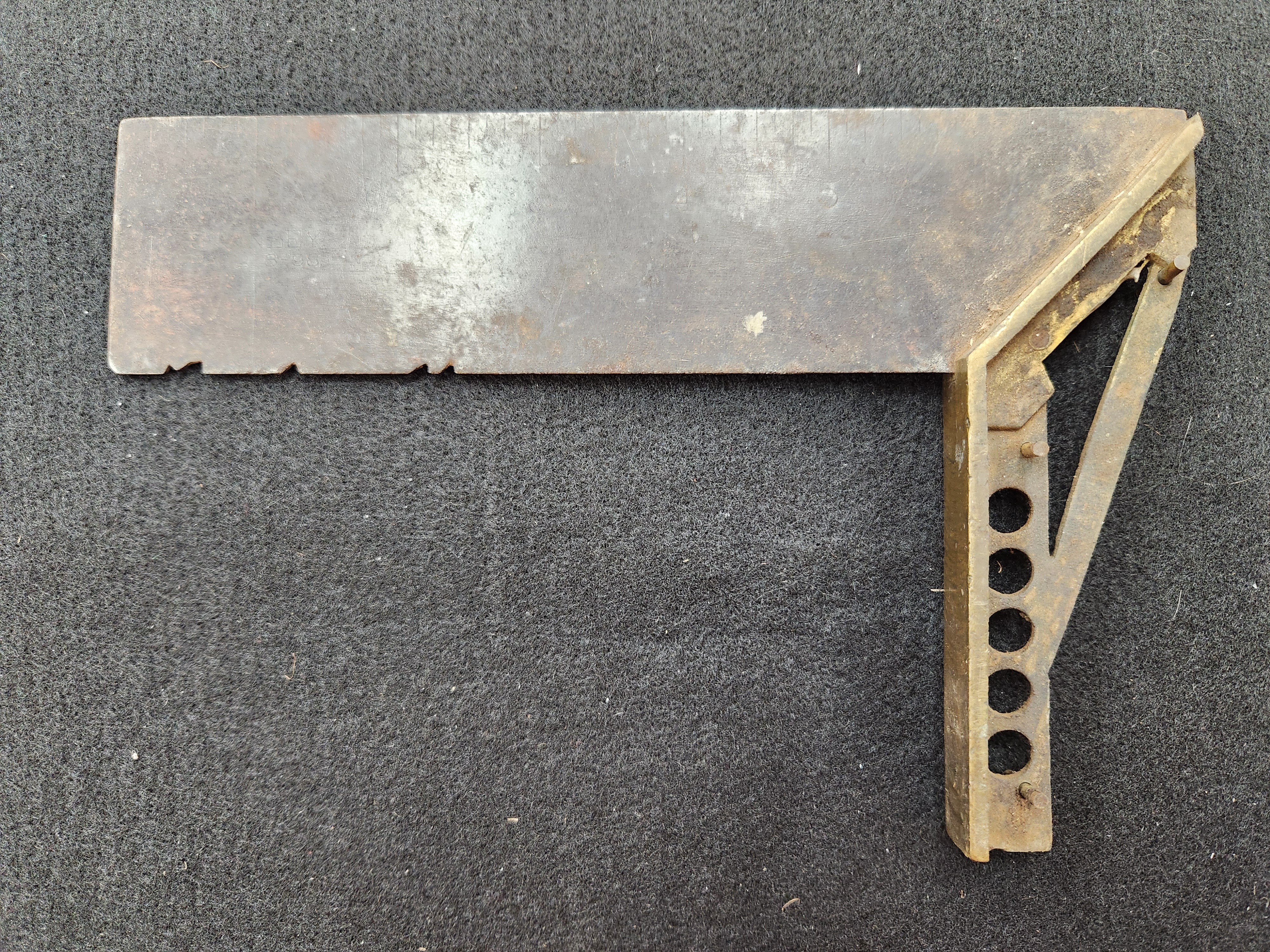
Type 1 (1869-1874) - Called the “Winterbottom’s Patent Combined Try and Miter Square No 2”, this square was offered in Stanley's 1874 catalog. This is Winterbottom’s June 29, 1869 patent, and was manufactured for a time by him in Philadelphia before the rights to the patent were acquired by Stanley. The author does not believe that Stanley manufactured this square, but rather sold out the last of Winterbottom’s original stock before transitioning to their own design (Type 2). There is no known way of determining which were sold by Winterbottom vs Stanley. There can be wide variations in the height, width, and thickness of the handles. Some squares have an additional screw in the center of the brass cheek. Some have additional brass along the back of the handle. Most, but not all, are marked with an arched mark of Winterbottom's name along with the patent date. The two illustrations here show some of these differences, but are not the only two possible configurations. While Stanley only advertised them in the 7.5", 6", & 4.5" sizes, 9”, 12”, and even 15” sizes are known.
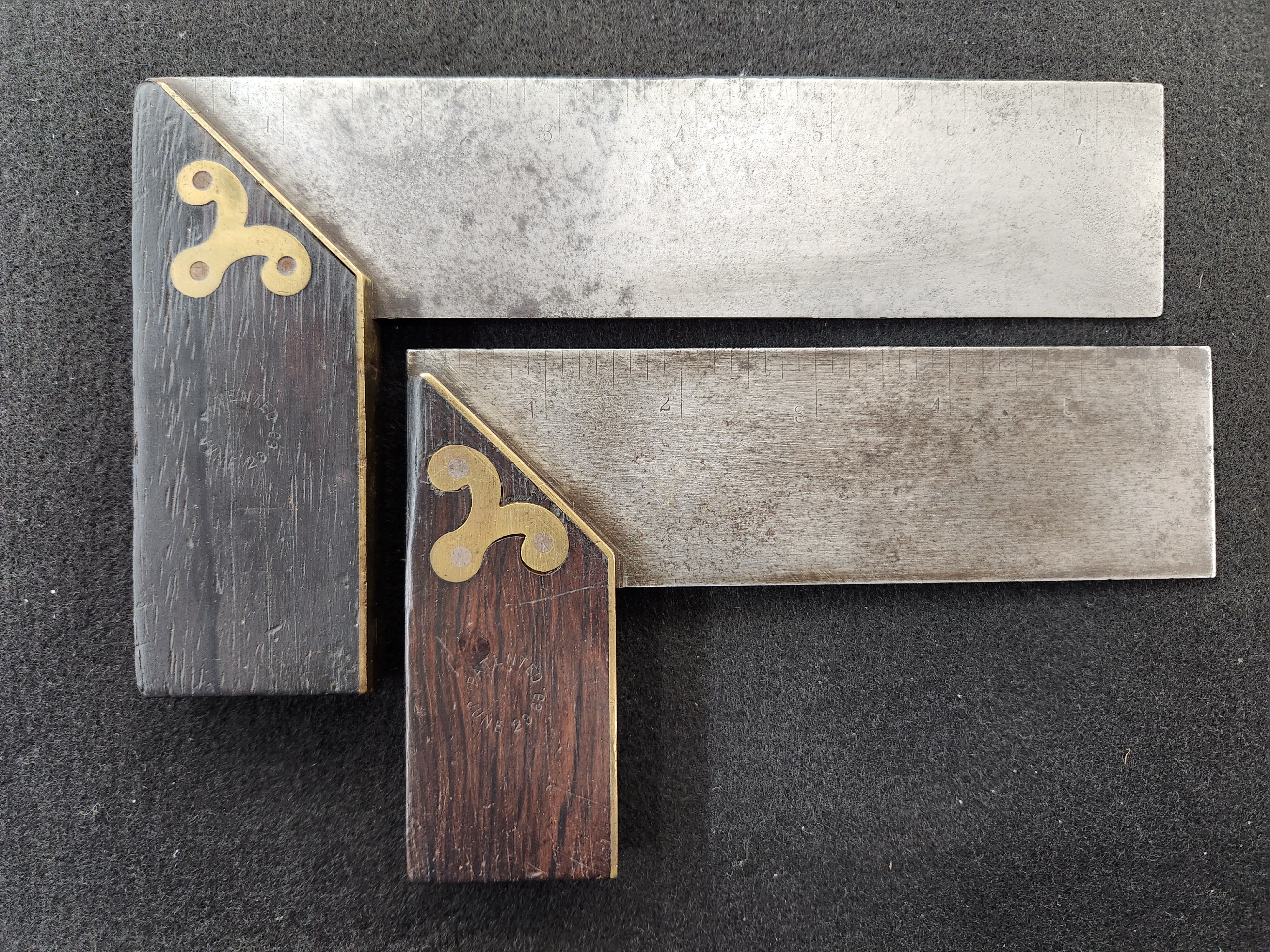
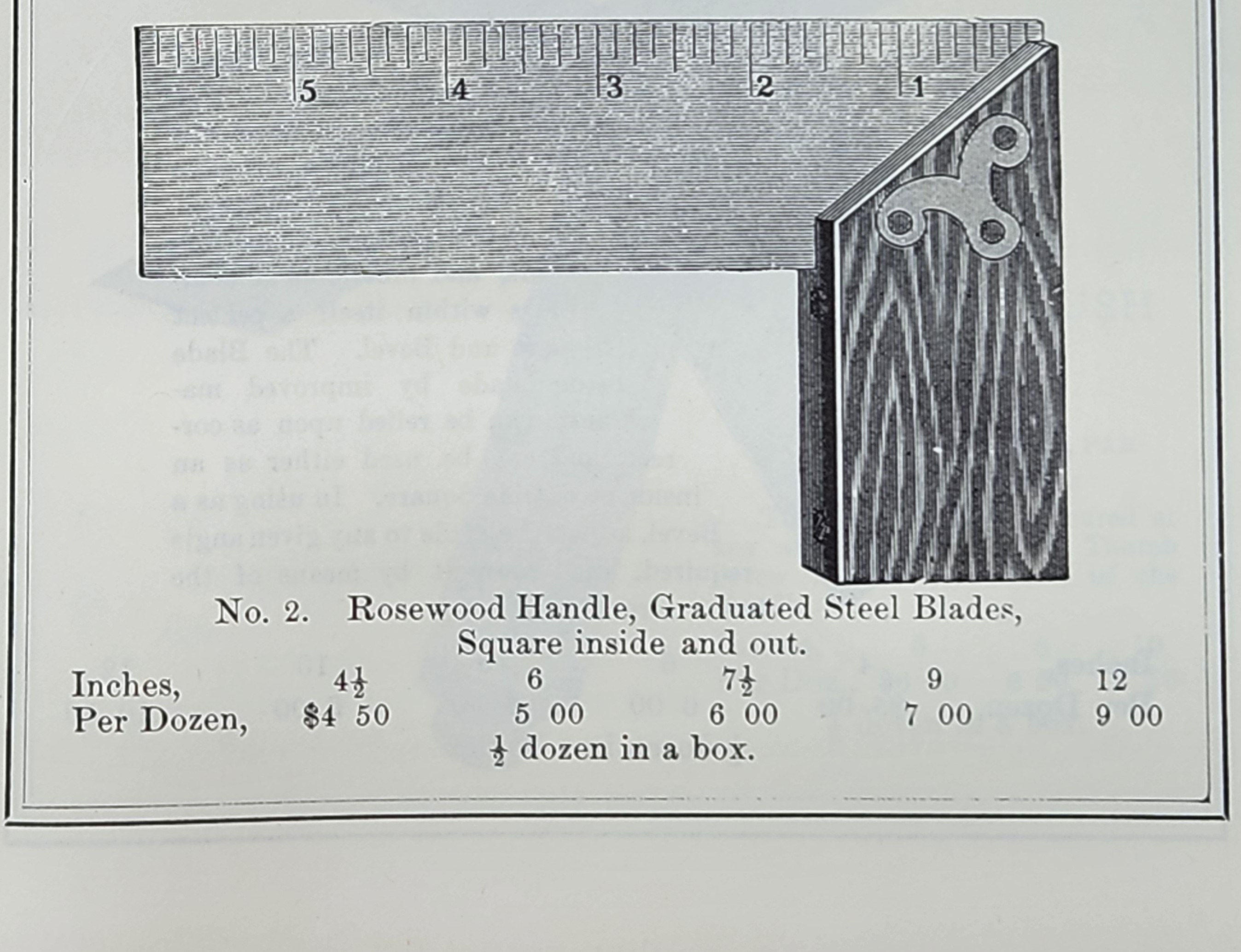
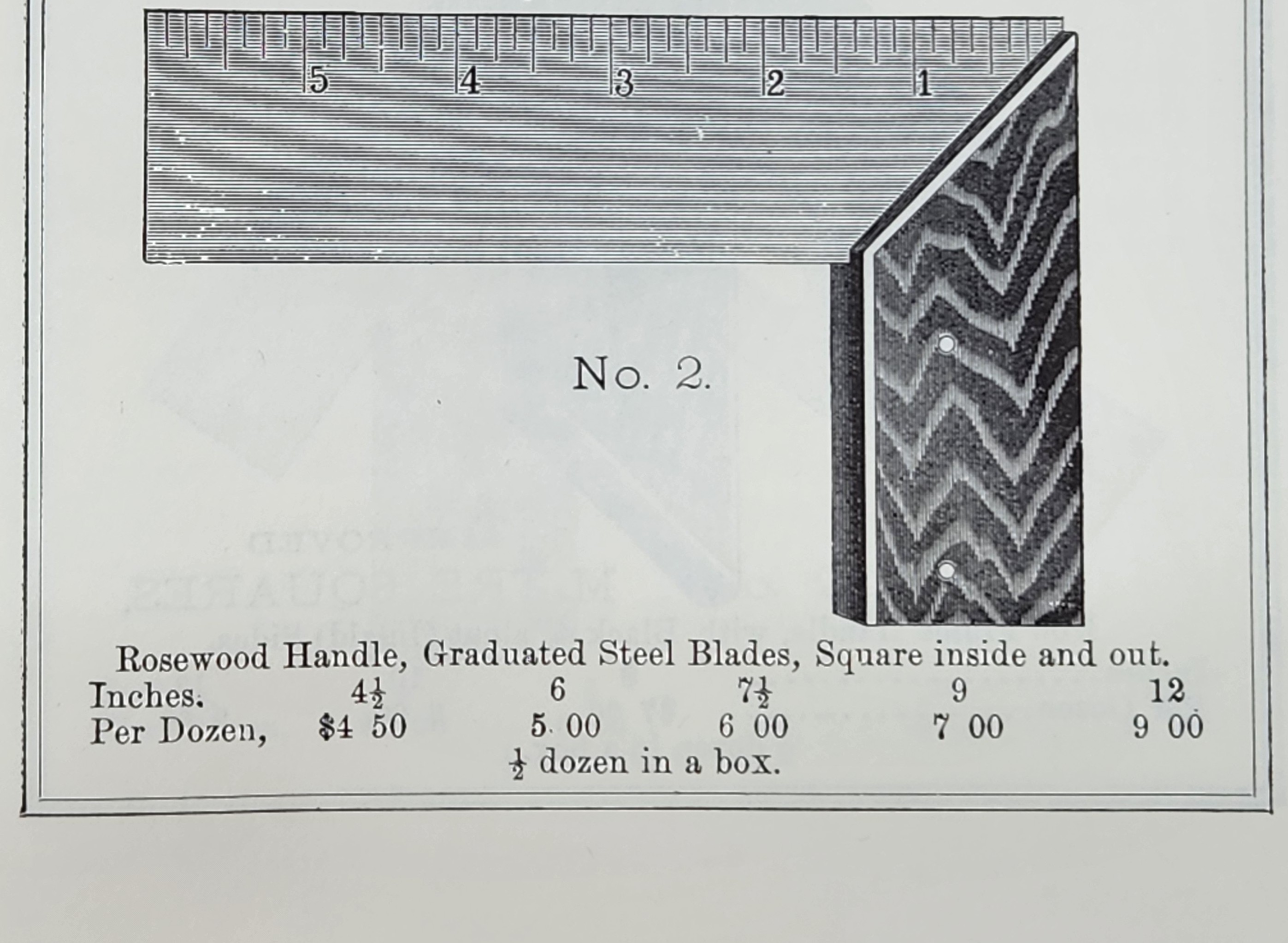
Type 2 (1874-1876) - Designed to replace the original Winterbottom Type 1 design once existing stock ran out, this square features an interesting shaped escutcheon on a rosewood handle with a graduated blade. It was still called the “Winterbottom’s Patent Combined Try and Miter Square No 2”. It is difficult to find despite being illustrated in the catalogs from 1874-1888. I suspect though that the illustration was recycled for a long while after the Type 3 was introduced. So even though conventional research would indicate 14 years of production, I believe it was only made for a couple years. It features a circular mark of the June 29, 1869 patent date. (Stanley offered them in 12", 9", 7.5", 6", & 4.5” sizes.
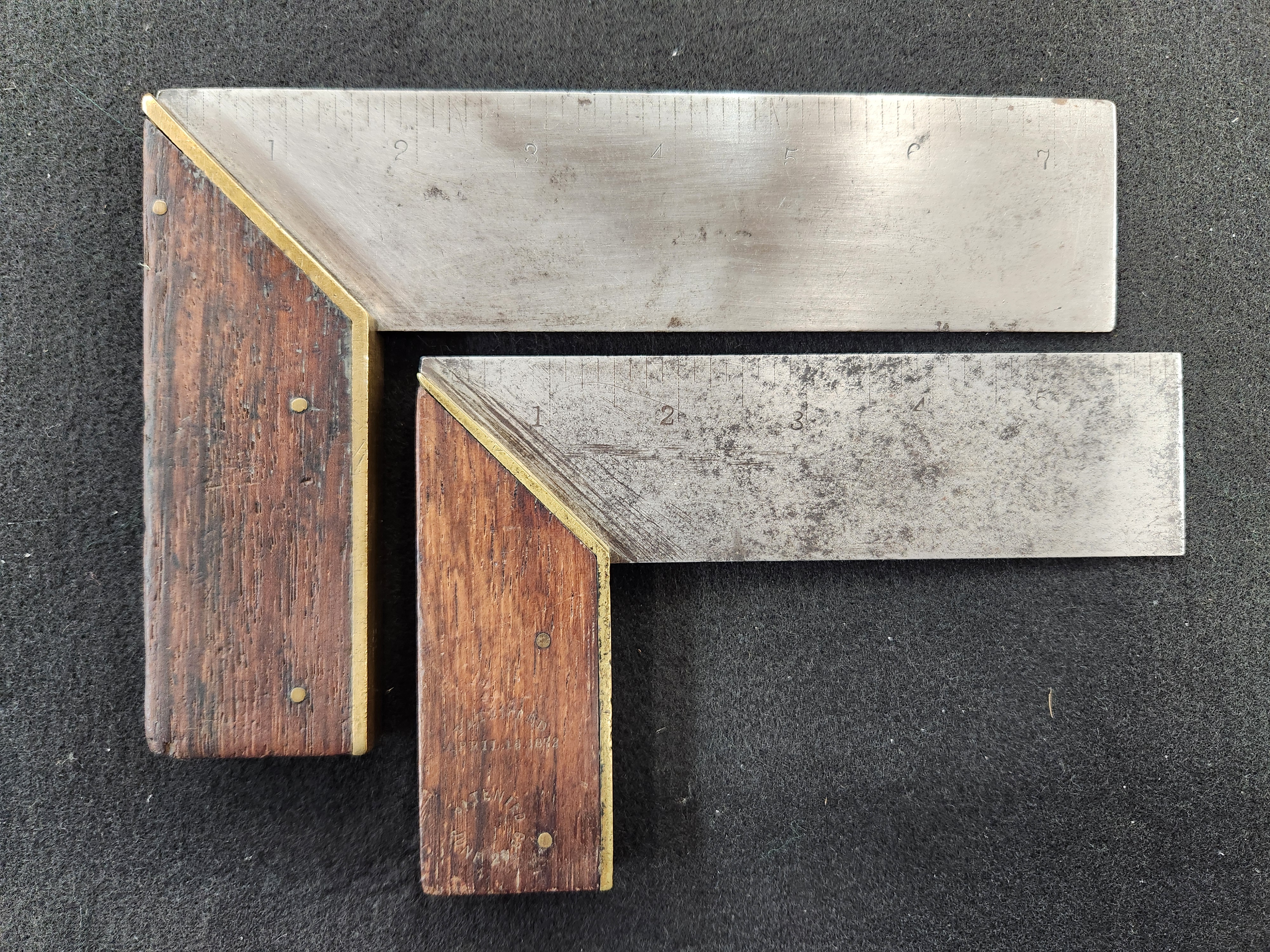
Type 3 (1876-1897) - The square now has no escutcheon and the rosewood is pinned to the brass skeleton handle with three brass pins (illustrated). The top-rear pin is omitted on the smallest two sizes, leaving only two pins. The handle is double marked with the June 29, 1869 Winterbottom patent in a circle, and Justus Traut’s April 16, 1872 patent for the handle construction is marked in an arch. Graduations run from the handle to the end of the blade. It is first illustrated in the 1888 catalog, but I suspect it was actually introduced much earlier. The fact that it is so commonly found supports a 20 year production run. It was permanently assigned as the No 2 in the 1888 catalog. The 12” is the least common, followed by the 4.5”. The 9", 7.5", & 6" are quite common.
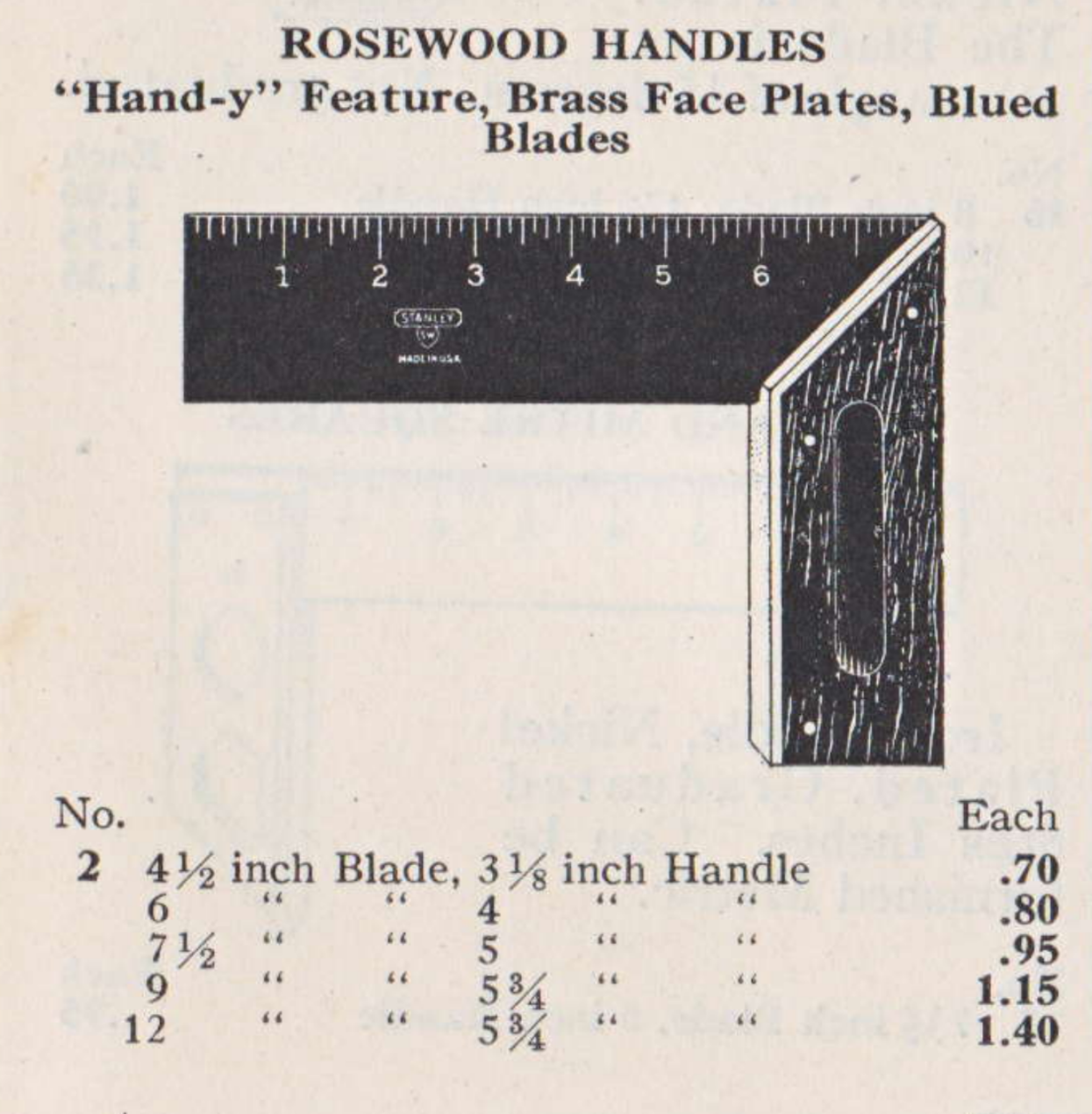
Type 4 (1897-1949) - The same basic design as the Type 3, but with the February 8, 1898 patented “Handy-Grip” grooves in the handle. All sizes now have 3 pins in the handle. Graduations now run from the end of the blade to the handle. The blade, rather than the handle, is now marked with the Stanley trademark, but the patent dates are no longer referenced. To further refine years of production by unique trademarks, see the Stanly No 20 type study. Stanley frequently produced these squares for resale by other hardware companies and they can be found with all manner of other markings. The 12" and 4.5" sizes were discontinued in 1941.
Henry Disston & Sons
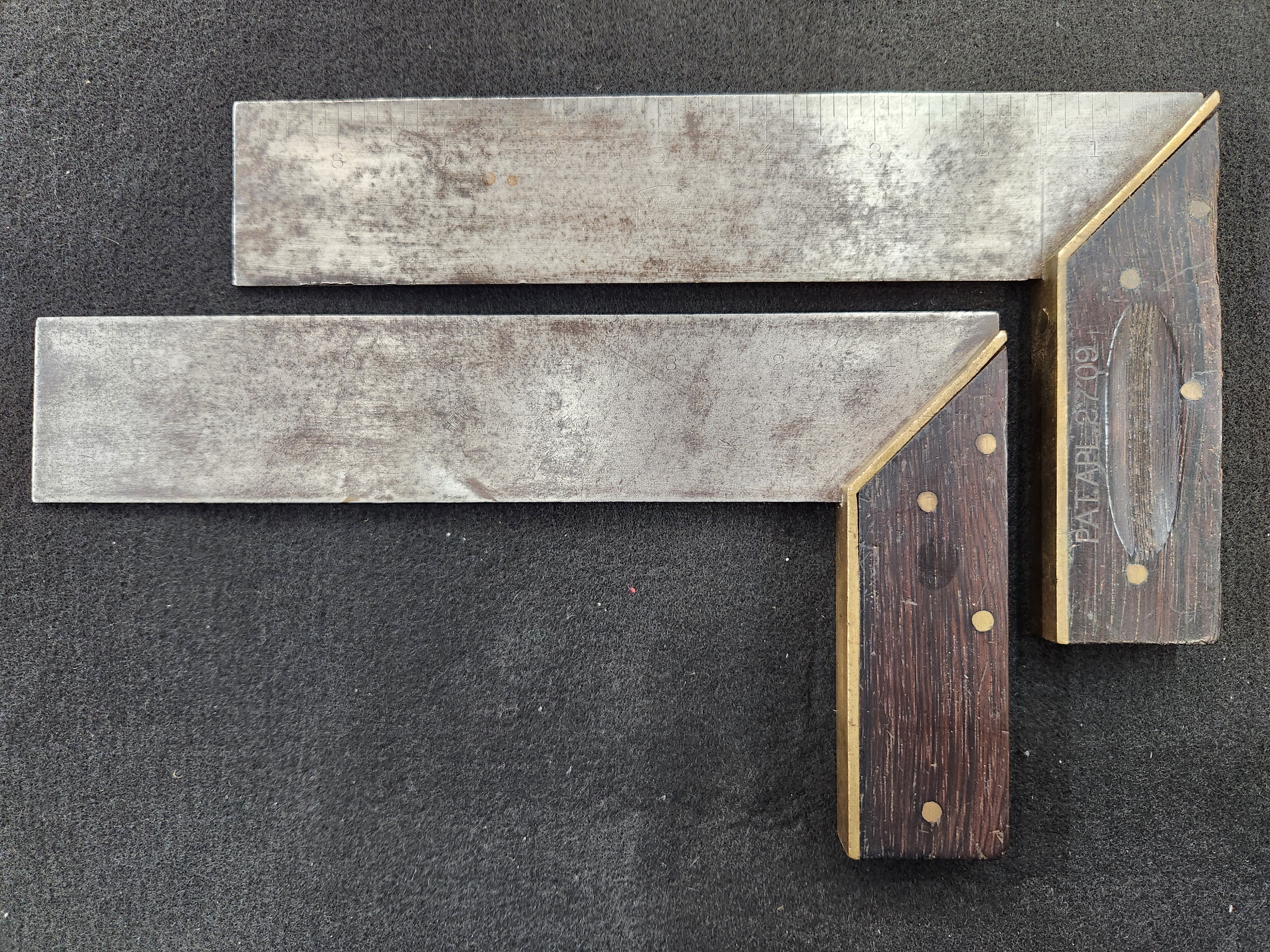
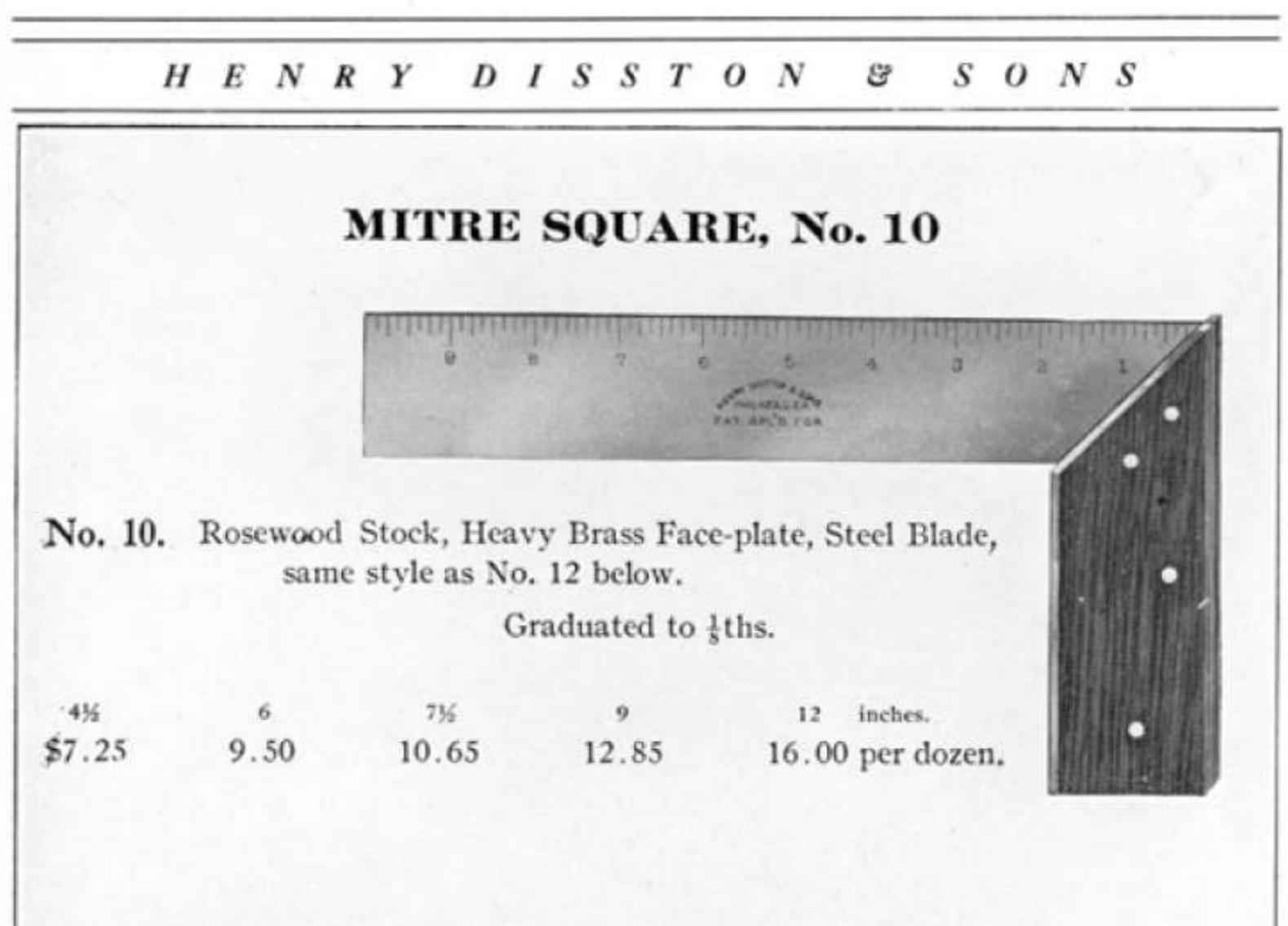
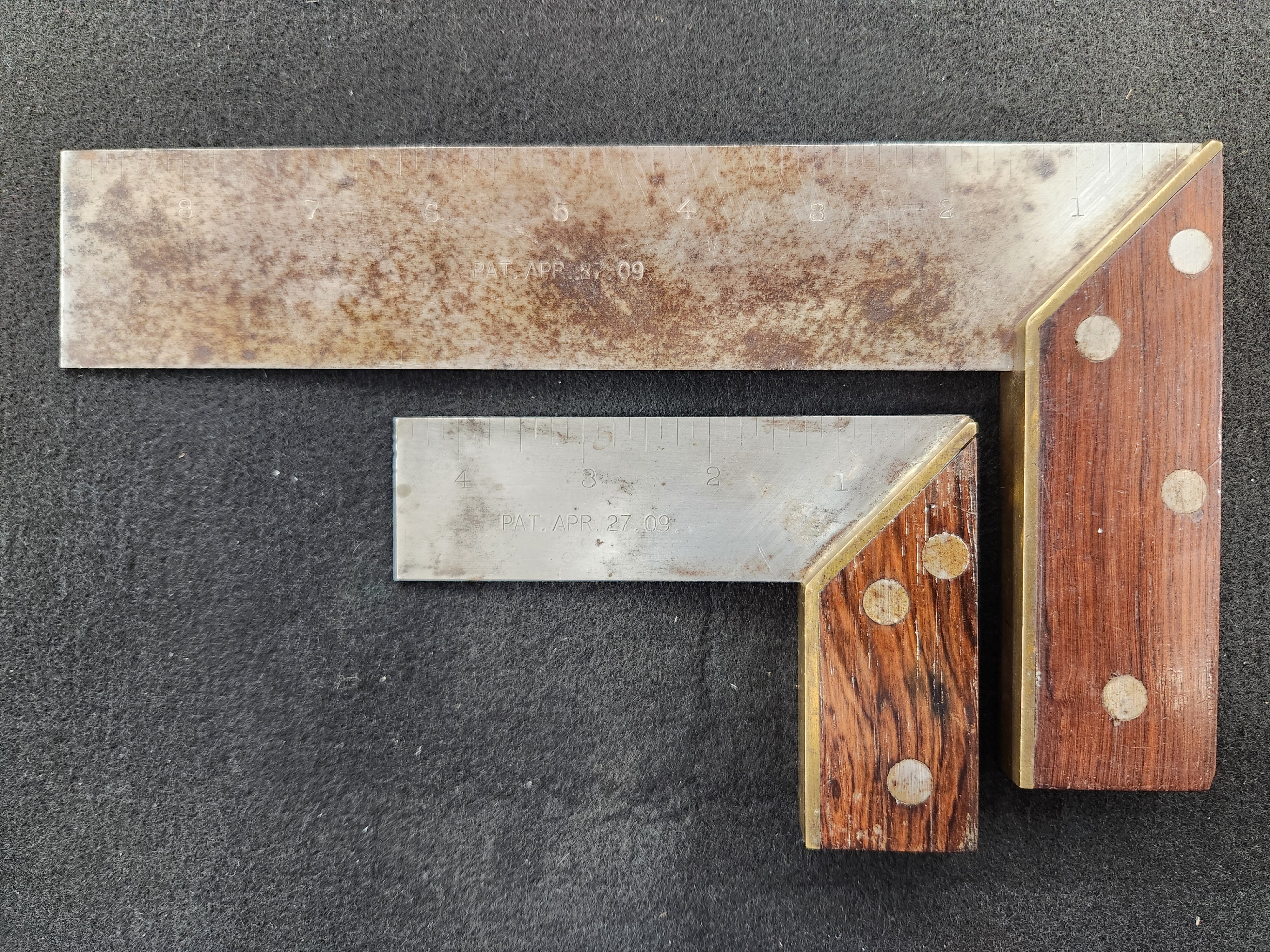
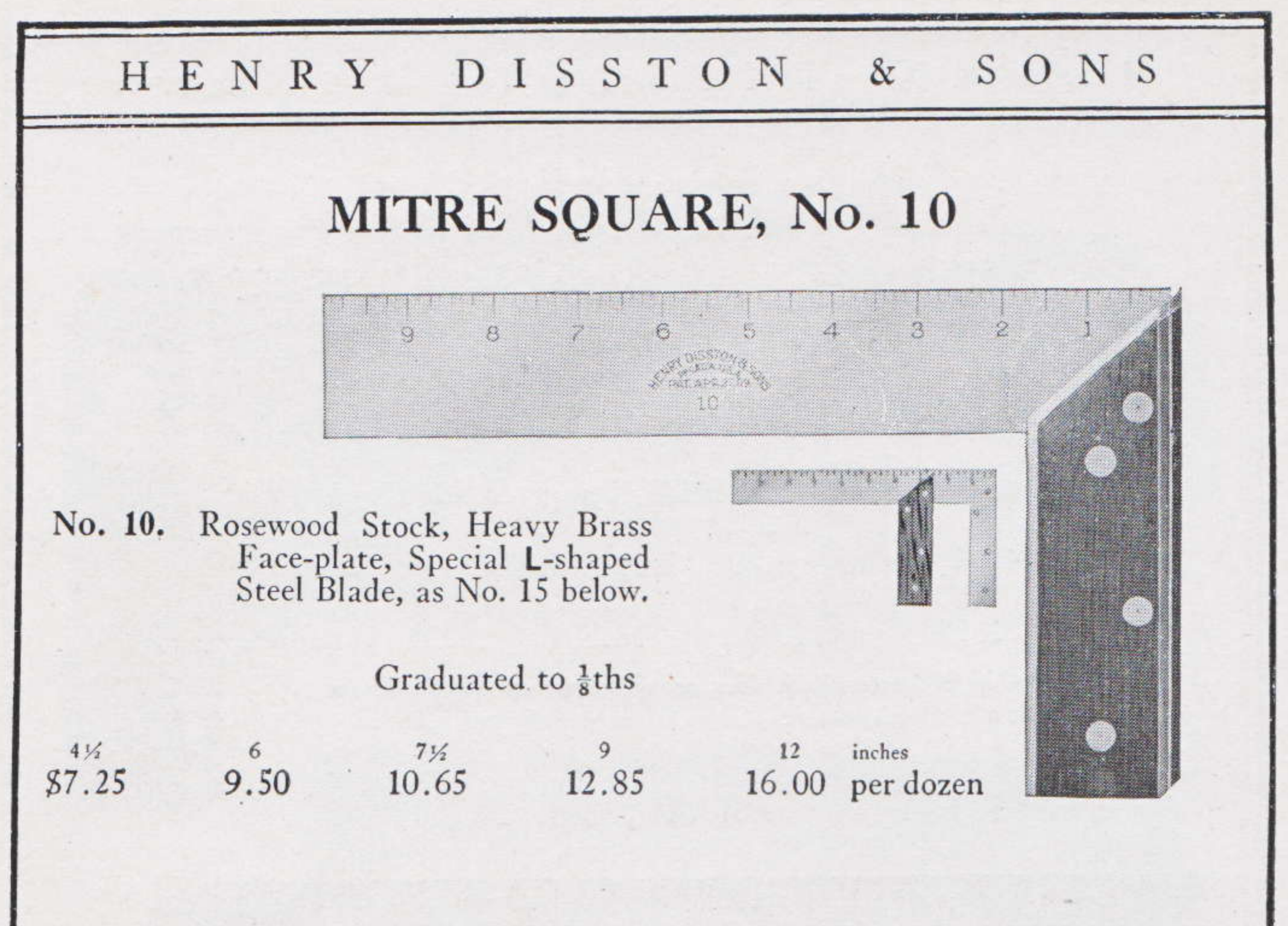
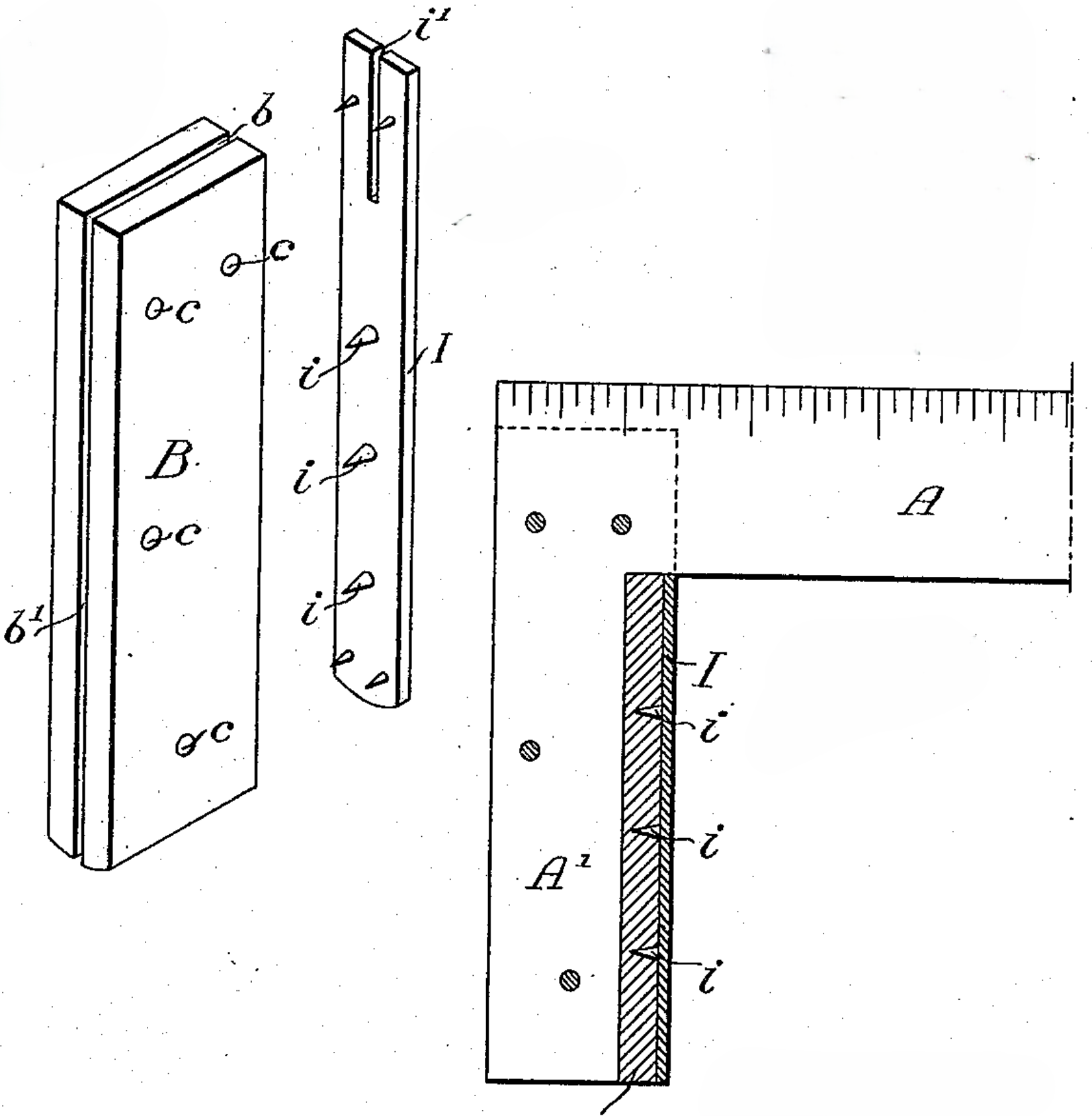
Disston did not offer a wood handled try-miter square until their 1901 catalog, but the illustration clearly shows they were simply reselling a Stanley Type 3 square and calling it the No 10. Disston acquired Ernest King’s April 27, 1909 patent and applied it to a try/miter of their own design as the No 10 no later than the 1911 catalog. The main advantage of this patent is that the blade turns and runs down the handle, making it almost impossible for the square to become untrue. The Type 1 design featured four brass rivets staggered down the handle (first illustration). The Type 2, introduced sometime between 1914-1918, used 4 very large steel rivets in the same configuration (third illustration). The brass wear plate was replaced by steel during WWII, making those versions very striking in all steel. Disston also produced these squares for any number of other hardware companies, and many names can be found on the blades besides Disston. Keen Kutter versions feature vertical ridges down the center of the handle groove and frequently have the patent date stamped on the handle rather than the blade (second illustration).
Southington Hardware Company (SOHACO)
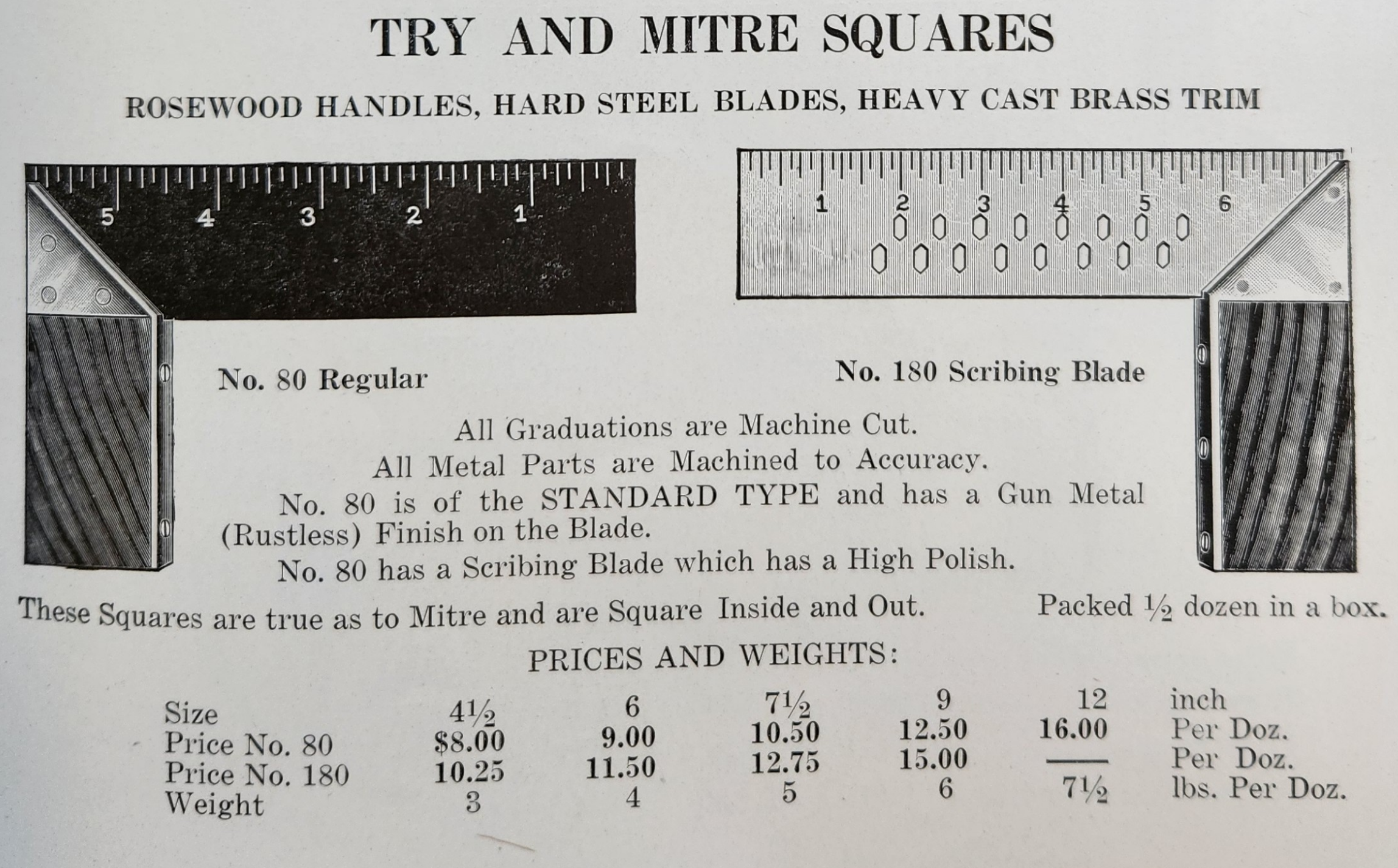
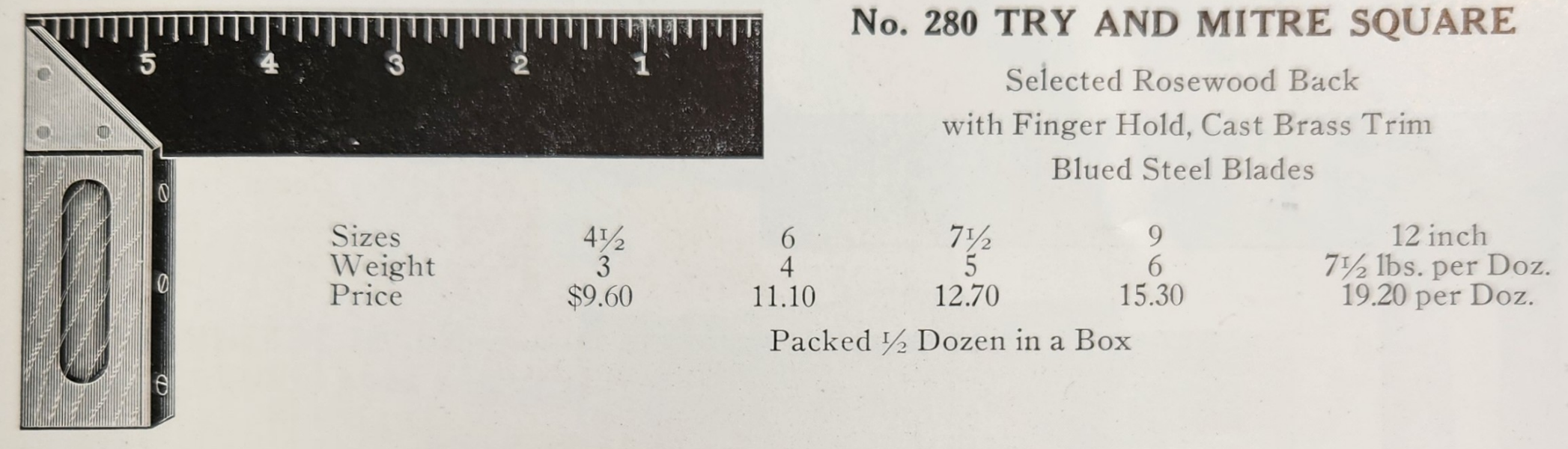
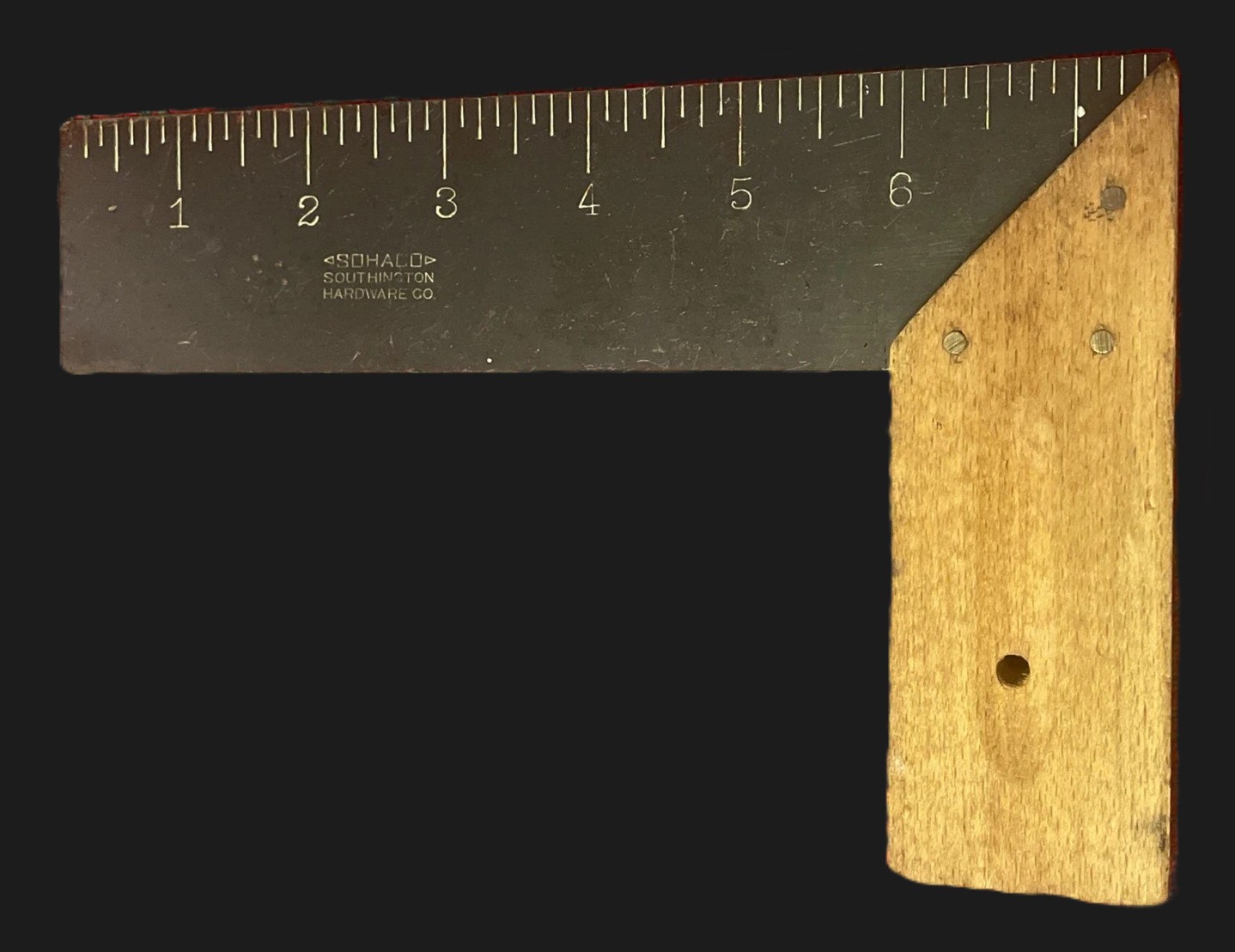
No 80/280 - Featuring brass covered handle cheeks attached with three steel rivets, these are easily the most commonly found try-miter after the Stanley Types 3 & 4. The No 80 is earlier and has no groove on the handle. The groove was added sometime between 1918-1926 and the square was re-numbered to No 280 by the time of the 1926 catalog. There was also a No 180 offered in the 1918 catalog which is identical to the No 80 but for the addition of scribing holes in the blade. Due to a lack of catalogs, I am unsure of when exactly these started or ended production, but believe they had a very long run; probably for nearly 50 years spanning the early 20th century. These did not have their own patent.
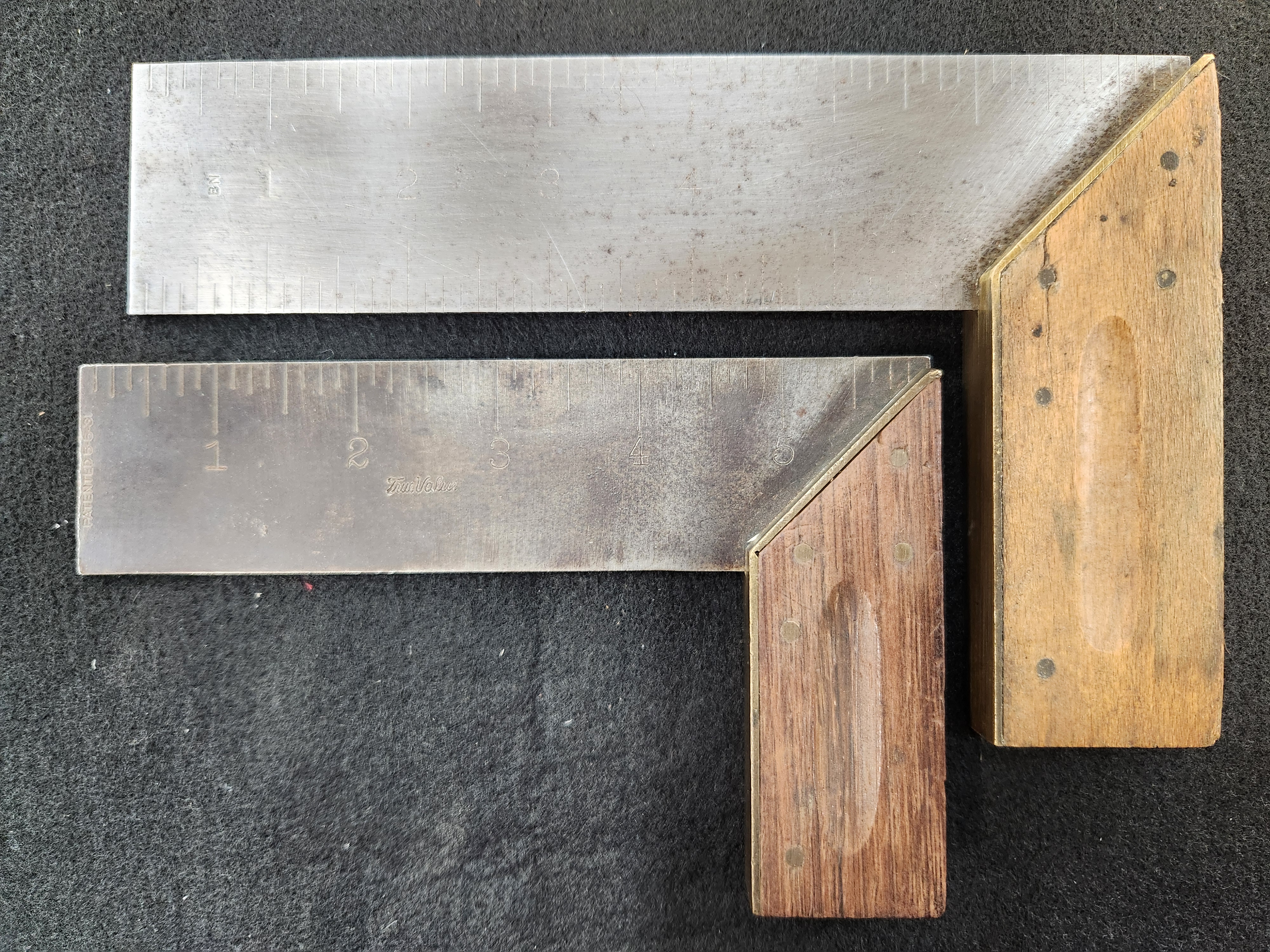
Billington Patent - Southington started offering a new design of try miter after Samuel Billington patented a new way of handle construction with his May 5, 1931 patent. The resulting design has 5 brass rivets on the handle. It is not known what model number this was given or when production ended, as I am aware of no Southington catalogs from after the patent. The patent date or patent number is frequently found parallel to the end of the blade, rather than in the center of the blade. Finding one marked SOHACO is actually less common than finding them marked by other hardware companies who resold them, like Craftsman and True Value. I have seen these squares in both rosewood and beech.
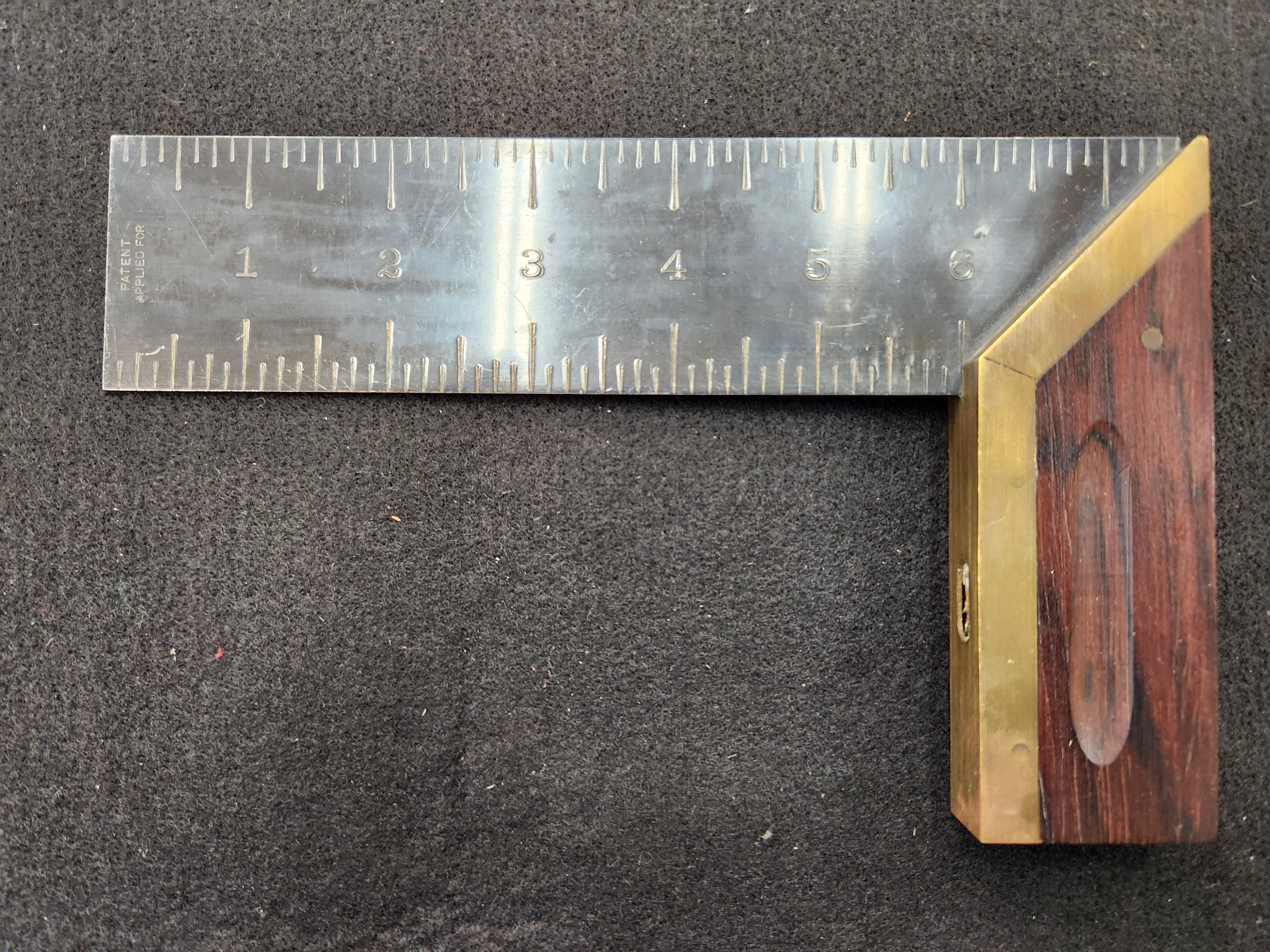
w/Level - This intriguing square is only ever marked as patent applied for, and is never marked by a maker. However I am relatively certain it was made by Southington. For one, a style of regular try square which is marked by Southington has the exact same extra large wear plate that wraps around the sides of the handle. Secondly, the arrangement of the 5 rivets on this square is the same 5 rivet arrangement on their Billington patent square. Lastly, the patent applied for mark is placed at the end of the blade, similar to how SOHACO marked some of their Billington squares. As the handle construction is fundamentally different from the Billington patent though, I believe that this was an attempt at a different patent. Perhaps for including a level or for the unique design of the wear plate. This square likely dates to the early 1930s, same as the Billington patent.
wo/Plate - This is a cheap unpatented square that eschews any brass wear plate, and was likely marketed as a homeowner/handyman type model. This is supporded by the wood being beech rather than rosewood. With the three cheek rivets holding onto nothing but wood, this square would not have been particularly robust. Heavy use could also quickly wear down the handle resulting in it no longer holding square. Once again it is not known when this was offered or what its model number was due to a lack of catalogs, but likely dates to the 1940s-50s.
PEXTO
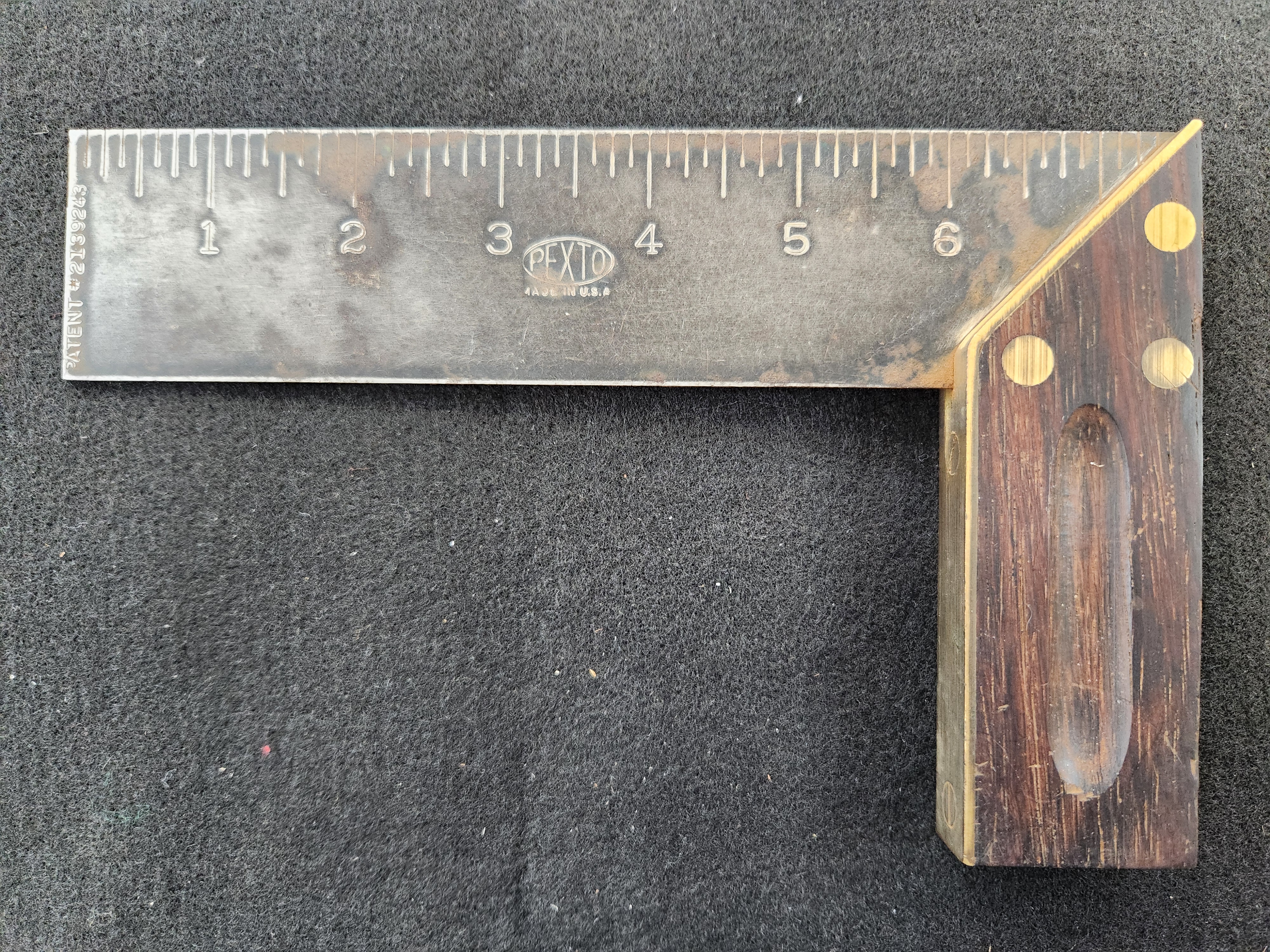
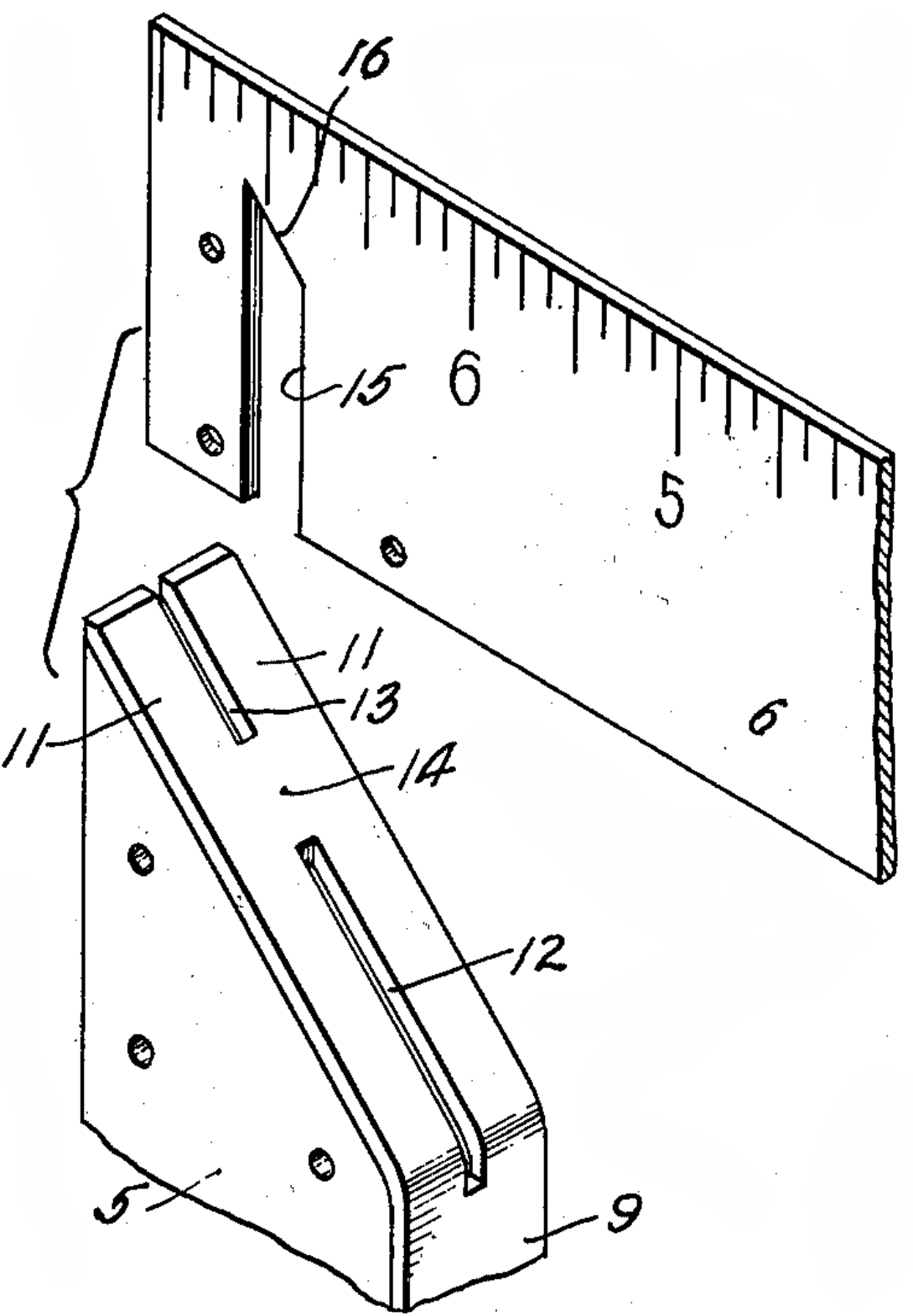
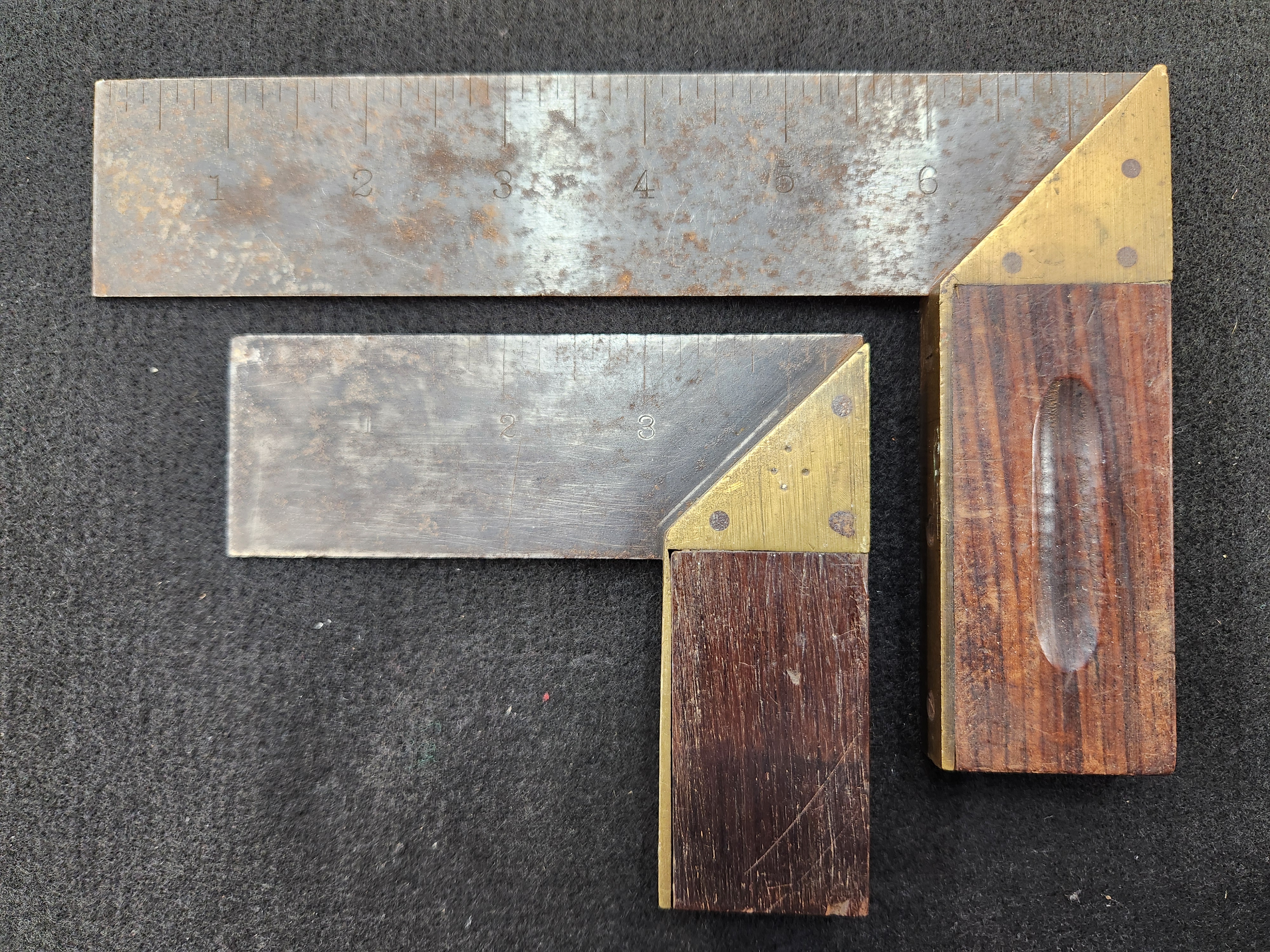
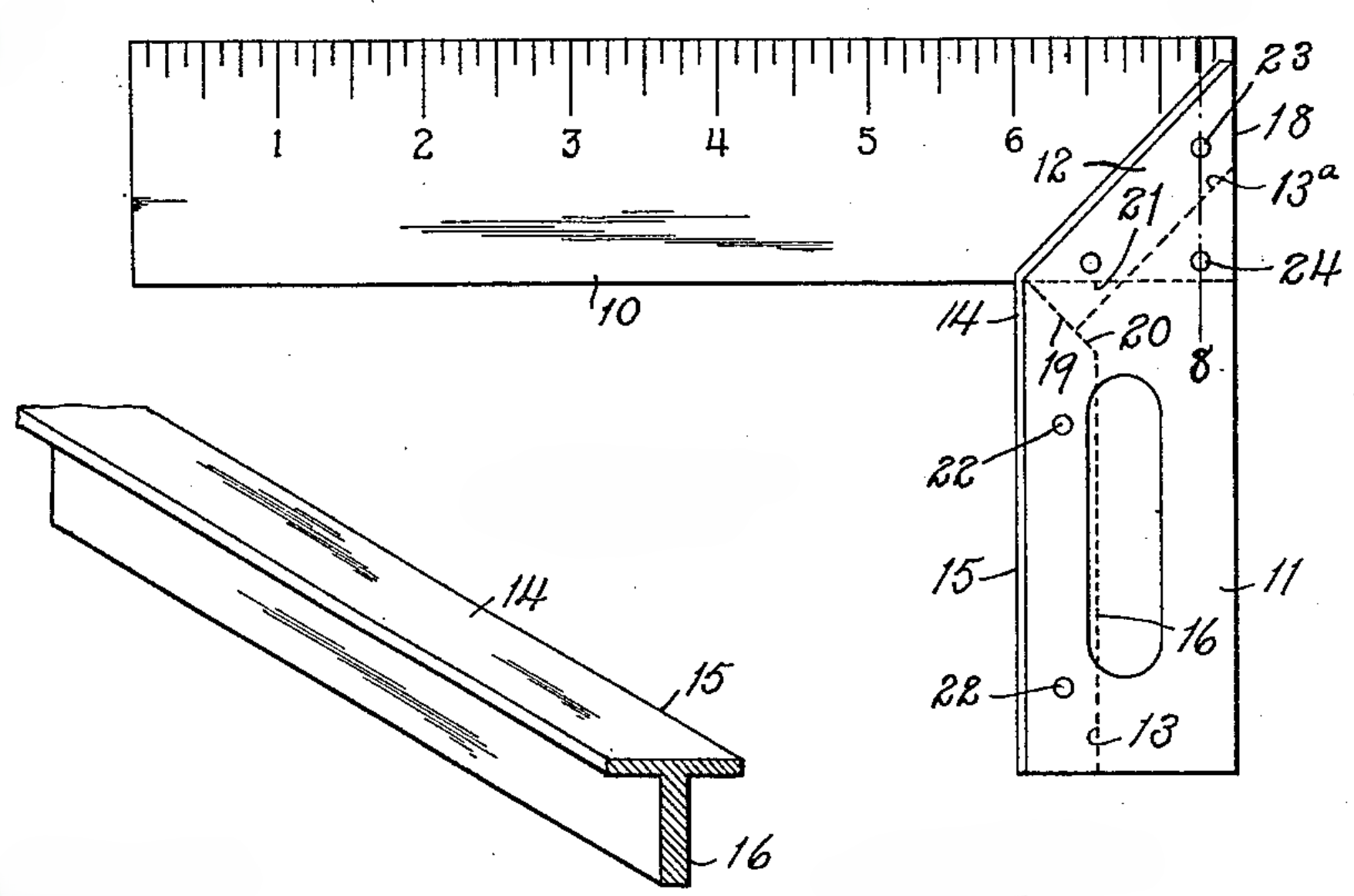
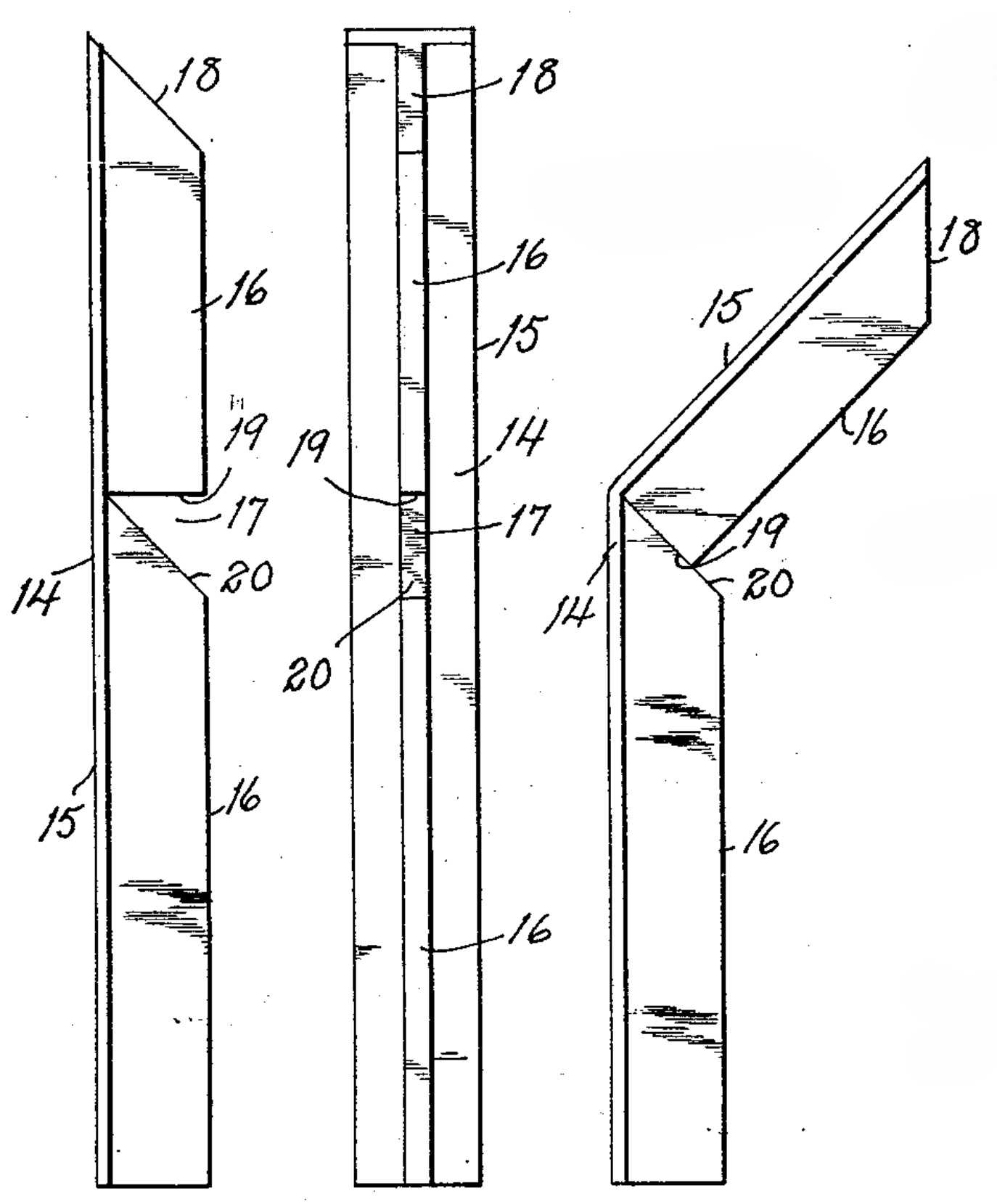
The latest of all the patents discussed here, PEXTO produced this square using William Mohr’s December 6, 1938 patent. Mohr’s design seems somewhat complicated, with a large notch in the blade which mates with slots in the handle milled to match. It’s not clear how much more strength this would add to the blade/handle connection beyond the large brass rivets already present. The patent date or patent number is usually found parallel to the end of the blade, rather than in the center of the blade with the PEXTO trademark.. A lack of PEXTO catalogs post 1938 means we do not know if it had a model number of how long it was offered.